Follow Barack Obama prior and during his tenure as the 44th President of the United States. Read about my personal observations along with every day facts as they happen. This blog will only submit factual information about the first black President, now in his 2nd term of office.
BARACK OBAMA MEMORIBILIA available right HERE at www.obamaitems.info

BARACK OBAMA IN THE WHITEHOUSE

Send E-mail to the Editor at: obamainthewhitehouse@mail.com
Click on the GOOGLE TRANSLATE BUTTON BELOW AND SELECT YOUR LANGUAGE

Search This Blog

Showing posts with label health care reform. Show all posts

President Obama Previously talks about Health Care Reform

Thursday, October 27, 2011

In the following video, President Obama talks to Conservative talk show host Michael Smirconish from Philadelphia on his program back on August 20, 2009, that explains the President's actions about health care. The president wasn't afraid to talk to this Conservative commentator. The president extends the conversation about health care reform. He talks about premiums going up. He talks about pre-existing conditions and talks about the components of health care. He talks about the public options which is totally non-profit that will provide affordable health insurance.
He talks about intervention of the banks, the auto industry,  and the perception that he is responsible for these interventions, but for that matter was intervened originally by the prior Republican administration of George W. Bush.


Read more...

House nears the Historical Vote - Very likely that Obama may sign bill into law within the next 24 hours

Sunday, March 21, 2010

It appears that shortly the Health Care Reform bill will become law. The Health Care bill was passed in the Senate last December, and now the House is set to take an historic vote that most likely will pass through the House.  Many people are still wondering whether or not if the Democrats still have the votes to pull it through. Up until the final vote, Democrats continue to try and round up the 216 necessary votes to pass the bill in the House. The Chairman of the House Democratic Caucus, Rep. John Larson, told CNN that "We've got the votes."
With all this said, the Democrats confirm that they actually don't have 216 solid votes, but with a little work, the Democrats can see that they will have the necessary vote count. As of last count, 33 Democrats are determined to vote against the bill. To actually kill the bill, there must be at least 38 Democrats against it, and so it looks like there is a pad of about 5 Democrats now that should push the bill through.
Since Democrats control Congress, it is highly unlikely now that the opposition party can stop the bill. Also, there is a package of changes that is being considered, even if the bill passes as it stands. That means that in a few days there may be another vote, if the package proposition passes tonight, which would mean another vote in the Senate.
There is allot of manipulation going on amongst the Senators on both the Republican and Democratic sides of Congress. Members seem to be positioning themselves to face their constituents after the vote. Whether they individually vote 'yea' or 'neah' can mean allot in their future as the Senator representing their district.
It is obvious that some of the Senators are voting the way they are because they are worried about their jobs, but others are voting because they are doing what they believe is right. After the vote this evening, there will be a sigh of relieve amongst the Democrats, including President Obama, as now he will have been successful in passing one of the largest legislation's since Medicare or Social Security. This is definitely major, but the fact of the matter is that most of the people without health care or people that cannot afford health care now will not be able to benefit from the new health care reform right away. It may take as long as 2013 or 2014 before a total of approximately 32 million people can acquire the necessary health care that they need. This will be when the workshops take effect.
The next thing that must happen will be that the economy needs to rebound, and rebound quickly. The outcome of jobs can and will directly effect the mid term elections in November, and there is a good chance that several key Democratic seats may be lost, and likewise, if the job market dramatically increases by then, there may be a big jump on Democratic Senators in November.

Read more...

Health Care Reform - Most likely will not become law until 2010 If At All

Tuesday, November 10, 2009

As reported in an earlier article, it does appear as if President Obama's deadline for enactment of health care reform most likely will not take place by the end of the year, as reported by Illinois' Dick Durbin, the second-highest ranking Democrat in the Senate. Even if the Senate manages to pass a bill, then there must be a congressional conference committee that would take in consideration passed proposals from both the House and the Senate, and a final vote would take place for approval from each chamber. After this has been completed, the bill will reach President Obama's desk to be signed into law.
In the past, President Clinton tried to overhaul health care in the early 1990's, and that is considered one of the reasons the GOP takeover in Congress happened during the 1994 midterm elections. So now guess what. It looks as if it may be a repeat, as midterm elections will be taking place, and many governorships will be on the line in that year, 2010. There should be allot of debates in order before a combined bill that can be presented to the President will surface. This is very unfortunate for President Obama, as he still vows to fight for the Health Reform plan that has already passed the House, and hopefully soon in the Senate.
To show his dedication and support for President Obama and the need to pass a Health Care Reform bill, President Clinton is actively pushing for health care reform and has recently arrived on Capitol Hill, trying to convince Senators to not stall and prepare to vote.
The time line of events concerning the road the health care bill is taking is playing right into the hands of the conservative movement. The longer the bill gets stalled and the more people think about health care reform, the better chance the bill has to fail. It is already known that most Republicans would never vote for such a bill, especially if it may put their future jobs on the line. The failure of such a bill would help revive the conservative movement, and possibly give Republicans a chance to regain the White House as soon as 2012.
No doubt this vote on health care is crucial, but President Obama is putting his future as President on the line, as he sticks up for his beliefs regarding health care.  President Obama's popularity has been noticeably down, but that doesn't stop him in making the decisions he must make.

Read more...

Health Care Reform Bill - passes in the House - Senate to follow

Sunday, November 8, 2009

In a sweeping victory, the House of Representatives voted on the health care reform bill just moments ago with a vote of 220-215, giving President Obama a crucial victory. This bill represents the largest health policy change in four decades. It truely is a victory, but at the same time, you must be cautious, as the Democratic-controlled U.S. House of Representatives rejected an alternate Republican health plan. Now there will be mounds and mounds of debates on the issue, as this is the most talked about issue for the last 30+ years. Speaker of the House Nancy Pelosi compared the legislation to the passage of Social Security in 1935 and Medicare 30 years later. President Obama stated "I look forward to signing it into law by the end of the year"

According to Rep. John Dingell who heavily favors national health insurance mentioned "It provides coverage for 96 percent of Americans. It offers everyone, regardless of health or income, the peace of mind that comes from knowing they will have access to affordable health care when they need it."

The bill passed in the house because both Democratic conservatives and Republican conservatives voted for and passed an amendment in a tally of 240-194 votes that would impose tough new restrictions on abortion coverage in insurance policies to be sold to many individuals and small groups. Because of this amendment Democratic conservatives voted for the bill. The amendment basically states that there will be no federal funds would be used for abortion, but in cases of rape, incest and the case of a mother in danger would be the exceptions to the rule.

The new law, once in effect would require that most Americans would be required to carry insurance, and provide federal subsidies to people would could not afford it any other way. Insurance industries could no longer deny coverage with the reason being a preexisting medical condition. Higher insurance premiums for people by insurance companies based on gender or medical history will be a thing of the past.

The health care plan would create a federal marketplace that would allow consumers to shop for their own coverage. The federal government could sell the insurance, but most agree that such a move would make the costs go higher.

President Obama praised the House and said "now the united States Senate must follow suit and pass its version of the legislation. I am absolutely confident it will."

Read more...

Positives and Negatives of President Obama's Health Care Reform Package

Saturday, August 22, 2009

Opinion of  'James', editor of  'Obama in the White House' blog

All you hear lately surrounding Barack Obama these days is 'Health Care Reform'. Actually, there are some main reasons for it. It represents Barack Obama's very first main political test as President. You may have thought that the economic stimulus plan would have been his first challenge. Actually, support for the economic stimulus plan was split down party lines, and a few of the right wing activist senators also voted for the bill. So actually it wasn't a very big challenge. But now, in the forefront is his first real test known as Health care reform. Results of Health Care reform whether it becomes law or not has become a major factor that will help determine President Obama's future as President of the United States. With less than 1 year in his presidency in a first term, people are already making predictions of his re-election, and most everyone believes that health care reform success or failure will take a major part in the next presidential election in 2012.
President Obama believes that the present system will not work much longer. He claims that with the present care of today, we now wait until people get sick, then provide them with care. Preventative medicine is almost not heard of these days. Presently, 164 million Americans have insurance through their work. Approximately 14 million people pay for their own insurance. It has been reported that 49 million people in the United States do not have any kind of insurance. It includes people who have elected not to have it, and people who simply cannot afford to pay for it. It includes people who cannot acquire insurance because of existing health conditions. For extreme right wing activists or so called "conservative republicans" support for the bill will never be supported, but President Obama is pretty much determined to get some bi-partisan support for his bill. Without the support, the bill will be almost certain not to pass.
If most everyone agree that health care reform is necessary, then why has this reform bill become President Obama's biggest challenge. It is a fact that insurance costs have more than doubled since 1999, as costs are now up more than 117%. Without a doubt, the main reason for people not supporting the bill is cost. President Obama has claimed time and time again that Nationalized health care can be provided without adding to the deficit in the next decade. This statement so far has almost been impossible to prove on paper. People are becoming skeptical on the Presidents decisions on Health Care reform, and has received less support for the reform bill as each day rolls along.
In a previous administration, namely President Clinton, he tried to get a health care reform bill passed in 1993, but was unsuccessful. People may not realize this fact, but President Clinton came up with the bill and provided it to Congress and it did not pass. This time around, President Obama had decided to let Congress create the bill in hopes that this bill would be better accepted for passage. So both the House and Senate created their own Health Reform bills that must be scrutinized by both sides. Still a bill in any form so far has received less and less support.

In a netshell, here are some of the benefits of the plan if passed.

1) Lower costs of insurance
2) People will be required to have it
3) No discrimination based on existing conditions.
4) Premiums will be drastically reduces so health insurance is affordable.
5) Health Insurance industry supports the bill if it contains 'no public option'
6) Illegal immigrants/aliens will not benefit from medical insurance.

In a nutshell, here are some of the negatives for having the plan if passed:

1) Very high cost, up to 1,000,0000,000,0000 = 1 trillion dollar cost.
2) Higher taxes for the wealthy to help pay for the plan.
3) Backups in medBackups in medical care due to overwhelmed emergency rooms, and the lack of at least 10,000 more doctors are needed now, even before this bill if passed would create a rush of doctor and hospital visits.
4) Premiums will be paid by the uninsured if the insurance is not accepted by the employee from the employer.                
5) Less choices provided by government insured health care.
6) Illegal immigrants/aliens still will drain money from health care as they will still have access to hospital emergency rooms.

Read more...

What's in the health care reform bill for Illegal Aliens?

Wednesday, August 19, 2009

The health care reform issue is a pretty vast issue, but one part of it has to deal with illegal aliens. One of the questions in my survey located at the top of this blog is whether aliens should also benefit from health care reform. Right off the bat, you may say absolutely not. But the only problem here is that illegal aliens are getting a free ride right now. They can walk into a state run hospital and receive health care for free. Do you think that Barack Obama is going to take health care away from people. All he talks about is being able to supply health care to every person in the United States. That includes aliens. Is that fair. I don't think so. There are so many people that try to do things right, and there are 100X more doing things wrong and getting away with it.

For example in a personal situation, I am now married to my wife who is from the Philippines, who did everything it would take to come here legally, and at a very high cost. In a few years, she will be able to receive her naturalization papers and become a U.S. citizen, and of course I support her all the way. She could not just step across the border as the illegal aliens do from Mexico and take up a new life in this country, along with getting free medical attention. I had to sponsor her as my fiancee so that she could acquire a fiancee visa. The attorney fees and paperwork that I needed to file required a good sum of money. My wife, then as my fiancee, went through the U.S. Embassy in the Philippines, and we flew back to the United States together in an 8,000 mile journey. She obtained a work permit first, and it was a little difficult for us and a little costly, as we had to apply twice and pay the fee twice, because the paperwork was originally filled out improperly the first time. Then came the green card which meant another wait and another fee.

I work for IBM, and my medical insurance premiums have been rising year after year, but the insurance covers both my wife and I. But I pay more and more each year. According to President Obama's health care plan, I will have the ability to keep my present insurance, or go with the government assisted health plan if it becomes law. Most people will elect to go to the government assisted health care plans, because they most likely will be allot cheaper.

At the present time, I think that the final version of the new health care plan supported by President Obama would call for illegal aliens to register if they want any medical coverage at all.
If the bill gets proper attention, then most likely illegals will not be able to get medical coverage for free if they now want health insurance coverage. If they are working, their employers should have to supply a policy to them that they can afford. Employers will no longer be allowed to harbor illegal aliens. Actually, they were never permitted to do so in the past, but they got away with it so that they could acquire cheap labor from the illegal aliens. Now it may mean that illegal aliens would would have to register, spelling the beginning of the end for illegal aliens.

So when you hear that President Obama will be supplying health insurance to illegal aliens, it most likely will be for a price. No longer will a person that doesn't even belong here in this country be able to receive health insurance for free. This alone should save substantial money when it comes to health care costs, along with reducing the revenues lost by state run hospitals.

But now here is a sad fact. Since hospitals don’t collect immigration figures… it’s unclear how much people who are in this country illegally add to health care costs — but it’s probably a pretty significant chunk of change.

Consider this: There are about 46-million people without health insurance in the U.S. Of those, the Pew Hispanic Center estimates that there are about six-million uninsured adults who are illegal; and 700,000 uninsured children.

These facts just underscore the depth of the problems centered around health insurance. President Obama may have been trying to bite off more than he can chew here in a matter of speaking, but still he has the guts to try. He has allot of supporters, but the figures of people that favor his plans are dwindling every day.

Regardless of what happens here, most people say that something needs to be done regarding affordable health insurance for everyone. But you will still have a few people that are totally against the government becoming involved with medical issues of the American people. Conservatives (Republicans) will most likely fight to the 'death' sort of speaking, to do whatever can be done to stop the President from passing any kind of bill to help the American people receive government sponsored health care coverage.

Read more...

Health Care Reform - by David Axelrod - Senior Advisor to the President

Thursday, August 13, 2009

Dear Friend,

This is probably one of the longest emails I’ve ever sent, but it could be the most important.

Across the country we are seeing vigorous debate about health insurance reform. Unfortunately, some of the old tactics we know so well are back — even the viral emails that fly unchecked and under the radar, spreading all sorts of lies and distortions.

As President Obama said at the town hall in New Hampshire, “where we do disagree, let's disagree over things that are real, not these wild misrepresentations that bear no resemblance to anything that's actually been proposed.”

So let’s start a chain email of our own. At the end of my email, you’ll find a lot of information about health insurance reform, distilled into 8 ways reform provides security and stability to those with or without coverage, 8 common myths about reform and 8 reasons we need health insurance reform now.

Right now, someone you know probably has a question about reform that could be answered by what’s below. So what are you waiting for? Forward this email.

Thanks,
David

David Axelrod
Senior Adviser to the President

P.S. We launched www.WhiteHouse.gov/realitycheck this week to knock down the rumors and lies that are floating around the internet. You can find the information below, and much more, there. For example, we've just added a video of Nancy-Ann DeParle from our Health Reform Office tackling a viral email head on. Check it out:

Health Insurance Reform Reality Check

8 ways reform provides security and stability to those with or without coverage

  1. Ends Discrimination for Pre-Existing Conditions: Insurance companies will be prohibited from refusing you coverage because of your medical history.
  2. Ends Exorbitant Out-of-Pocket Expenses, Deductibles or Co-Pays: Insurance companies will have to abide by yearly caps on how much they can charge for out-of-pocket expenses.
  3. Ends Cost-Sharing for Preventive Care: Insurance companies must fully cover, without charge, regular checkups and tests that help you prevent illness, such as mammograms or eye and foot exams for diabetics.
  4. Ends Dropping of Coverage for Seriously Ill: Insurance companies will be prohibited from dropping or watering down insurance coverage for those who become seriously ill.
  5. Ends Gender Discrimination: Insurance companies will be prohibited from charging you more because of your gender.
  6. Ends Annual or Lifetime Caps on Coverage: Insurance companies will be prevented from placing annual or lifetime caps on the coverage you receive.
  7. Extends Coverage for Young Adults: Children would continue to be eligible for family coverage through the age of 26.
  8. Guarantees Insurance Renewal: Insurance companies will be required to renew any policy as long as the policyholder pays their premium in full. Insurance companies won't be allowed to refuse renewal because someone became sick.
Learn more and get details: http://www.WhiteHouse.gov/health-insurance-consumer-protections/

8 common myths about health insurance reform
  1. Reform will stop "rationing" - not increase it: It’s a myth that reform will mean a "government takeover" of health care or lead to "rationing." To the contrary, reform will forbid many forms of rationing that are currently being used by insurance companies.
  2. We can’t afford reform: It's the status quo we can't afford. It’s a myth that reform will bust the budget. To the contrary, the President has identified ways to pay for the vast majority of the up-front costs by cutting waste, fraud, and abuse within existing government health programs; ending big subsidies to insurance companies; and increasing efficiency with such steps as coordinating care and streamlining paperwork. In the long term, reform can help bring down costs that will otherwise lead to a fiscal crisis.
  3. Reform would encourage "euthanasia": It does not. It’s a malicious myth that reform would encourage or even require euthanasia for seniors. For seniors who want to consult with their family and physicians about end-of life decisions, reform will help to cover these voluntary, private consultations for those who want help with these personal and difficult family decisions.
  4. Vets' health care is safe and sound: It’s a myth that health insurance reform will affect veterans' access to the care they get now. To the contrary, the President's budget significantly expands coverage under the VA, extending care to 500,000 more veterans who were previously excluded. The VA Healthcare system will continue to be available for all eligible veterans.
  5. Reform will benefit small business - not burden it: It’s a myth that health insurance reform will hurt small businesses. To the contrary, reform will ease the burdens on small businesses, provide tax credits to help them pay for employee coverage and help level the playing field with big firms who pay much less to cover their employees on average.
  6. Your Medicare is safe, and stronger with reform: It’s myth that Health Insurance Reform would be financed by cutting Medicare benefits. To the contrary, reform will improve the long-term financial health of Medicare, ensure better coordination, eliminate waste and unnecessary subsidies to insurance companies, and help to close the Medicare "doughnut" hole to make prescription drugs more affordable for seniors.
  7. You can keep your own insurance: It’s myth that reform will force you out of your current insurance plan or force you to change doctors. To the contrary, reform will expand your choices, not eliminate them.
  8. No, government will not do anything with your bank account: It is an absurd myth that government will be in charge of your bank accounts.  Health insurance reform will simplify administration, making it easier and more convenient for you to pay bills in a method that you choose.  Just like paying a phone bill or a utility bill, you can pay by traditional check, or by a direct electronic payment. And forms will be standardized so they will be easier to understand. The choice is up to you – and the same rules of privacy will apply as they do for all other electronic payments that people make.
Learn more and get details:
http://www.WhiteHouse.gov/realitycheck
http://www.WhiteHouse.gov/realitycheck/faq

8 Reasons We Need Health Insurance Reform Now
  1. Coverage Denied to Millions: A recent national survey estimated that 12.6 million non-elderly adults – 36 percent of those who tried to purchase health insurance directly from an insurance company in the individual insurance market – were in fact discriminated against because of a pre-existing condition in the previous three years or dropped from coverage when they became seriously ill. Learn more: http://www.healthreform.gov/reports/denied_coverage/index.html
  2. Less Care for More Costs: With each passing year, Americans are paying more for health care coverage. Employer-sponsored health insurance premiums have nearly doubled since 2000, a rate three times faster than wages. In 2008, the average premium for a family plan purchased through an employer was $12,680, nearly the annual earnings of a full-time minimum wage job.  Americans pay more than ever for health insurance, but get less coverage. Learn more: http://www.healthreform.gov/reports/hiddencosts/index.html
  3. Roadblocks to Care for Women: Women’s reproductive health requires more regular contact with health care providers, including yearly pap smears, mammograms, and obstetric care. Women are also more likely to report fair or poor health than men (9.5% versus 9.0%). While rates of chronic conditions such as diabetes and high blood pressure are similar to men, women are twice as likely to suffer from headaches and are more likely to experience joint, back or neck pain. These chronic conditions often require regular and frequent treatment and follow-up care. Learn more: http://www.healthreform.gov/reports/women/index.html
  4. Hard Times in the Heartland: Throughout rural America, there are nearly 50 million people who face challenges in accessing health care. The past several decades have consistently shown higher rates of poverty, mortality, uninsurance, and limited access to a primary health care provider in rural areas. With the recent economic downturn, there is potential for an increase in many of the health disparities and access concerns that are already elevated in rural communities. Learn more: http://www.healthreform.gov/reports/hardtimes
  5. Small Businesses Struggle to Provide Health Coverage: Nearly one-third of the uninsured – 13 million people – are employees of firms with less than 100 workers. From 2000 to 2007, the proportion of non-elderly Americans covered by employer-based health insurance fell from 66% to 61%. Much of this decline stems from small business. The percentage of small businesses offering coverage dropped from 68% to 59%, while large firms held stable at 99%. About a third of such workers in firms with fewer than 50 employees obtain insurance through a spouse. Learn more: http://www.healthreform.gov/reports/helpbottomline
  6. The Tragedies are Personal: Half of all personal bankruptcies are at least partly the result of medical expenses. The typical elderly couple may have to save nearly $300,000 to pay for health costs not covered by Medicare alone. Learn more: http://www.healthreform.gov/reports/inaction
  7. Diminishing Access to Care: From 2000 to 2007, the proportion of non-elderly Americans covered by employer-based health insurance fell from 66% to 61%. An estimated 87 million people - one in every three Americans under the age of 65 - were uninsured at some point in 2007 and 2008. More than 80% of the uninsured are in working families. Learn more: http://www.healthreform.gov/reports/inaction/diminishing/index.html
  8. The Trends are Troubling: Without reform, health care costs will continue to skyrocket unabated, putting unbearable strain on families, businesses, and state and federal government budgets. Perhaps the most visible sign of the need for health care reform is the 46 million Americans currently without health insurance - projections suggest that this number will rise to about 72 million in 2040 in the absence of reform. Learn more: http://www.WhiteHouse.gov/assets/documents/CEA_Health_Care_Report.pdf
Visit WhiteHouse.gov


Read more...

Health Care Reform - Front and Center after 200 days in Office

Thursday, August 6, 2009

Two days to go. You may ask to go for what? In two days, President Obama will have reached his 200th day in office. You will see several reports on how the President has performed in his first 200 days on a variety of subjects, but here now I would like to comment on  health care reform that our president is supporting. President Obama desperately wanted to have the health care reform bill passed by this time, but that wasn't to be, as the Congress is in recess for the summer. They will return in October to get ready for the vote on health care reform. You can bet that the debates are just beginning though. The two biggest obstacles could be finding a way to pay for the health care package, and attempt to win some conservatives/Republicans over for Bi-partisanship. President Obama would not need many Republicans to be able to get his health care plan through. The conservative Democrats, approximately 40 of them most likely will come to an agreement early next month.
Presently, the United States supports private health care practices, but the Obama administration is aiming to model the new health care system similar to the health care system in England. In that country, a nationally funded health care system is in effect. That means that there is universal health care coverage for everyone. It is funded by taxes. But here in the U.S. President Obama has vowed not to raise taxes on people that earn less than $250,000 per year. The question again is how Obama plans to fund the health care system. In England however, higher cost medicines and procedures in some cases are just not provided by the government. At this point in time, I do not exactly know how people with major illnesses in England are helped.
It goes without saying that Conservatives that are apposed to this plan and are not interested in a National Health Care system. They do not want government control in health care. But if these conservatives have this belief, then who can afford to continue to pay the rising health care costs, which has recently skyrocketed within the last 10 years. Why, because there is no intervention by anyone, including the government to control the rising costs. A situation just as urgent that people will want to address even more than health care is rising food costs. Approximately 34.4 million people in the United States, that equates to 1 out of every 9 people in this country receive food stamps. The present allocation is $134 per person per month. Most people claim that they don't have time to worry about their health care. They mostly hope that they will stay healthy without interjection of major health care. People seem to be more concerned about where their next meal will be coming from then their health care. After all, you have to continue to live  before you could take advantage of any health care system.
With the present state of the economy and the status of support for Obama's policies is also something to reckon with, as President Obama's approval rating now has dropped to only 57% down from 63% from only a few months ago. President Obama continues to fight for his policies regardless of the poll ratings. I highly doubt if he even looks at the polls. He doesn't seem to be slowing down on the issues that he is addressing. 65% of the people polled in a recent Galop poll show that people believe that President Obama is trying to handle more than he should. If Obama's approval rating continue to slide, the only thing that would save him would be if his plan saves the economy and at the same time, everyone would be able to go back to work.

Read more...

Health Care Reform - What is it about? Who opposes it? Who pays for it?

Tuesday, August 4, 2009

As mentioned in a prior article, I am not totally sold on the health care reform package that President Obama is boldly trying to pass. President Obama is hitting the road pretty hard, trying to sell his package to people at town meetings. During the 2008 presidential campaign, Obama said over and over that the middle class -- which he defined as anyone making less than $250,000 -- would not face any tax increase. As late as yesterday, President Obama re-iterated his promise that there would be no new taxes for the middle class. This was a response to his own Treasury Secretary Timothy Geithner and Larry Summers,director of the national Economic Council, said on Sunday that they could no longer guarantee that the middle class will be spared a tax increase.

Meanwhile, talk show hosts like Rush Limbaugh and Mark Lavin are attacking President Obama's health care plan pretty hard. They seem to be fueled by this bill, as they are spiking up the negative criticisms on Obama's health care bill. On today's show, Rush compared the Health Care bill a corrupt act by the President of the United States, and paralleled it to the likings of a Bernie Madoff. The conservative movement appears to be hammering at President Obama as hard as they can, but the question still lies, will all this be enough to overturn the inevitable vote that most likely will take place in September.
President Obama really wants this bill to pass by the end of this year, but in reality, Obama stated as one of his campaign promises that he would pass a health care plan bill by the end of his 1st term, in the year 2012.

A national health care plan seems great when you think that everyone would be covered by health insurance. But at whose cost?  If it is true that President Obama may have to tax the middle class,  when he promised as late as yesterday that he would not tax the middle class, then President Obama may loose credibility on his promises. This health care reform bill most likely will be one of the hardest pieces of legislation to pass while he is president. Other presidents tried to change it, as most everyone, both republicans and democrats alike believe that the health care polices need a little bit of improvement.

President Obama may have been able to get an economic stimulus package passed with just a few members of Congress actually reading the entire bill prior to voting on it, but this time it may be a little different. As the saying goes, 'lightning most likely will not hit in the same place two times in a row', may be the realization that President Obama will have to make every aspect of the plan be known to the public before Congress passes such legislation without reading it will not fly this time.

Why is President Obama pushing so hard for this legislation?

One reason may be because of the rising costs of medical coverage. Health insurance premiums have doubled in the last 8 years, rising 3.7 times faster than wages in the past 8 years, according to the Obama - Biden plan to lower health care costs and ensure affordable, accessible health coverage for all.

A second reason is because over half of all personal bankruptcies are directly caused by medical bills.

A third reason may be because of the serious flaws in the health care delivery system. It is estimated that 100,000 Americans die each year from medical errors in hospitals. Lawsuits are running rampant because of the issues at hospitals.

A forth reason may be because almost 25% of all medical costs goes to administrative and overhead costs, and the lack of a national computerized system to replace the antiquated paper-based record and information systems is needed, because this overhead increases the costs.

A fifth reason may be because tens of millions of Americans are uninsured because of rising costs. But others have no insurance because they elect to. This administration realizes that everyone needs affordable health care insurance. Even insured people have a difficult time in paying their medical bills due to rising costs, and elect to lower their coverages, in some cases to a point where they may just say they don't have any coverage at all. People just hope that they do not get sick.

A sixth reason is because since there is a lack of health insurance, there are too many Americans that would sacrifice and go without high-value preventative services, such as cancer screening and immunizations to protect against flue or pneumonia. The health care system of today seems to be a disease care system that treats only sick people, and not much covered on prevention and public health.

A seventh reason may be because according to President Obama and Vice-President Biden, Americans will have a choice to keep their present insurance and watch their premiums actually go down substantially, or if there is no active insurance for you, the government will provide affordable insurance. This will also ensure patients choice of a doctor and care without government interference. If you have health insurance, nothing changes, but if you do not have health insurance, you will have a choice of new, affordable health insurance options.

Regardless of what you believe in here, whether you are for or against a new health care plan, most everyone agrees that the health care system needs to be re-vamped. Only the extreme conservatives believe that the plan should stay as it is, like the well-off kinds such as Rush Limbaugh and company. The only problem here is the cost. Only the upper middle class and wealth people can afford it, and nothing is presently in the way for it to continue to skyrocket out of most everyone's reach.

Read more...

Obama seems 'un-stoppable' with his campaign promises, now to include Health Care Reform

Thursday, July 30, 2009

The following article is the 'Opinion of the Editor' James

Amidst all the issues of the day, one outlying fact still remains. The so called 'right-wing' Republican party still does not have a truly valid leader that could compete with Barack Obama in the re-election year of 2012. In a CNN report, a prior candidate who never even made it to the RNC, Rudy Giuliani told reporters that what the Republicans need to do is focus on Obama's "left wing" policies. In an attempt to do just that, officials from the left to include one of the most prominent people that may run against President Obama in 2012, Governor Bobby Jindal from Louisiana appeared on 'Larry King Live' and talked about the current issues and the state of the economy in contrast to how President Obama sees the progress.
It is true that the economy does appear to have turned around as many indicators may show, but the facts are that until everyone who lost their job within the last 2 years gets to find another one and starts working again, this country will never be where it was prior to the economic meltdown of 2008 and 2009. The Governor was quick to point out that some of the jobs that have been created by the funds made available in Obama's stimulus bill in 2009 will not exist in a year from now. Many of the jobs founded since Obama's election have been part-time jobs.
Watching the news on TV yesterday, some of these people that now have jobs, whether they are part time or not, are so very thankful to Obama, and truly believe that if it was not for the funds that were made available for job seekers that would also help train these people, then they most likely would still be out on the street.
The republicans cannot deny that fact, as much as they would like too. But President Obama is now nearing his 200th day as President of the United States, and is moving with lightning speed, and the Republicans cannot keep up. Why they complain about the economic stimulus and the job situation, President Obama is about the pass a monumental health care reform bill, something that one of the prior Democratic Presidents, Bill Clinton was unable to do. President Obama did hit kind of a stumbling block at the moment, but he already has most of 'his ducks in order' as the Congress will now take a summer break, and then return in September. Obama was hoping for passage of his health care reform bill in July, but now it will not happen. There was lots of criticism over the bill, as members of Congress have decided that they wanted to truly read this bill before signing off on it, along with many issues with the bill that are debatable. As expected, President Obama did receive opposition from the conservative democrats, but in a last minute push to get the bill back on track, President Obama made a series of Town hall meetings and took his plan right to the public. The meetings were an over-whelming success. Prior to the summer break the Congress will take in August, many of the conservative Democrats now claim that they will now vote for the health plan.
This notion that a bill will actually pass is a 'red flag' for the Republican party, because if Obama was to get this bill passed prior to the beginning of 2010, then most likely they would not have anything to stop him from winning his re-election in 2012. Obama is coming true to one of his campaign promises, and that was to provide health care reform to the citizens of this country, so that everyone can acquire affordable health  care.

Read more...

Obama on Health Care Reform: This isn’t about me. This isn’t about politics.

Friday, July 24, 2009

Well, the gloves are off. The Obama administration is not going to let the Republicans or media control the debate on health care reform. Here he is at the Childrens National Medical Center talking about getting legislation passed and taking a certain Senator (Demint) to task for his comments last week:

Read more...

President Obama pushing HARD for his Health Care Reform Bill - but meeting lots of Resistance

Tuesday, July 21, 2009


During the Clinton Administration, President Clinton tried to pass a health care reform package. Why did he try to do it. The answer is simple. This country needs it. There are just too many people that cannot afford the coverage. But the answer always seems to be to tax the rich. With a $1 Trillion price tag this go around, and it's a bill that would require allot of work to get such a bill passed. That is the reason why President Obama is taking this issue directly to the people. Now why does he have to do that?  Well this time around, he doesn't even have a majority of democratic support, let alone enough bi-partisan support. The health care reform bill is weighed down with complex problems, and this bill can be one of the most important bills to be sent to his desk for signature. But in this case, it could be one of the most important bills not to reach his desk, unless he gets democrats and republicans alike to sign off on his health care reform plan.
President Obama knows that if he cannot get a majority of democratic support, his plan would be all but doomed. This would be a disaster for President Obama.
President Obama promised that he would get a health care reform bill passed this year, but if it fails, it most likely will get shelved for a long time, just like it did during the President Clinton administration. President Obama is putting his future career on the line here with this bill. The conservatives want to do everything possible to get him pushed out of office, but in this case I think that they still wouldn't have enough muster to get him out. Many people from the left may abandon him also after the failed vote on health care reform, but there should still be enough followers to keep him afloat, even to push him through to his next term.
But don't underestimate the importance of passing this bill in his eyes. He knows that if it does not pass, not only will he have a very difficult time in getting another health care reform bill sent to Congress this year or next year for that matter, he would then loose allot of support for future bills that he wants to put through Congress. His popularity level is going down, but with the failure of the Health Care reform bill, President Obama's popularity most likely will continue to sag. But just remember, he is not even through his first year as President. Do you think that the failure of this bill will kill his desire to pass other measures through Congress. Personally, I think not. He is not afraid to take chances and take his message to the people if he has too. And what better person is there to be a communicator to the people than President Obama. The American people hasn't seen anything like him since the days of the famous communicator Ronald Reagan. President Obama is not a quitter. One of the things he must do, especially since he may loose the health care bill, is to re-win over the conservative Democrats, somewhere totaling near 40. These are the Democrats that can kill any bill they want to kill, and side with the Conservative party on issues as they desire.
When you stop and think about it, President Obama to date has not lost any large bill that he wanted passed. There will be other major trials to come his way as far as new legislation goes, and he has at least 3 1/2 more years to test his Congress. In 2012, the real test will be to see who will run against him, and whether he would desire to re-run for President. As I said, he is not a quitter, and I feel confident that he will run again, regardless of what results are claimed for the health care reform bill.

Read more...

Health-care 'reform' raises serious issues

Saturday, July 18, 2009

Friday, July 17, 2009
By H.L. Schneider Jr. 
 
Here are excerpts from a letter sent July 11 to U.S. Rep. Jo Ann Emerson regarding health care reform:
 
Please. I beg you and your fellow representatives to take your time and give due diligence with respect to proposed health-care reform legislation. The decisions you make will have the potential to bankrupt the country and forever change the political landscape. A public option (son of Medicare) would have enormous consequences, not to mention the cost to taxpayers and the country. I fear many providers (physicians) might retire, productivity would drop and work satisfaction might be negatively affected. Make sure the cure is not worse than the disease.
What is really meant by "reform"? Is it the need to insure every American? The need to cut the per-capita expenditure for health care? Both? The 42 million to 50 million uninsured includes about 8 million illegal aliens. Some proposals do not cover this group. These individuals get care through the emergency medical system where they cannot be turned away.
I get the impression that emphasis is put on the coverage of all Americans and we'll worry about costs later. In reality, cost is the real problem.
If the government creates a Medicare clone, I fear it would eventually force private-sector companies out of business. There are more than 1,500 insurance plans available nationwide. Should we overhaul the system for the 15 percent who do not have health insurance, or is this a ruse so that eventually the U.S. moves to a national health-care system monitored and paid for by taxpayers?
The private sector competing with the government is like playing football and the opposing team is both player and referee. Government subsidies and tax credits will allow negotiation with suppliers not available to the private sector.
The government is great at hiding the true cost of running a business. The public option will not have to make a profit to stay in business, similar to the U.S. Postal Service or Amtrak.
Will our elected representatives and senators require the legislative, judicial and executive branches, as well as all federal employees, to use the public option before it is forced on the people they represent?
Medicine has never been a free-market enterprise. If you participate in the Medicare and Medicaid programs, balance billing is forbidden. What most people do not know is that the difference between the billed charges and the amount Medicare pays is the Medicare adjustment or write-off, not a loss or tax deduction for the physician. When I entered the field gastroenterology, the physician fee for a diagnostic upper endoscopy was reimbursed about $340 from Medicare. Today that same procedure is reimbursed at around $110. In my 20-plus years of medical practice my cost of keeping a clinic open has increased yearly, yet payment for services has not increased proportionately or in some cases has not increased at all due to contractual arrangements.
Cost is probably the meat on the chopping block. It is true that the U.S. spends more per capita on health care than any other country. With innovation and research come new medicines, new treatment guidelines and new equipment or devices. These improvements result in a longer life span, the ability to work and less pain and, in many cases, avoid surgery or allow for a less invasive form of surgery. Several nemeses play a significant role in medical cost, such as chronic illnesses for which there is no cure but improved treatment, the noncompliant patient and one's responsibility for self. A significant portion of health-care dollars are confined to four chronic conditions: diabetes, obesity, cancer and cardiovascular disease. How will reform address patient responsibility?
The current administration would like for you to believe there is significant waste within the health-care system. The operational nature of our current system accounts for a significant amount of U.S. health-care cost. The largest area for spending appears to be administration. Hospital care is also a significant expense. Technology can be a blessing or a problem. Technologies in some cases outpace our ability to evaluate them. Coverage for using these technologies normally is based on evidence that they work, not on cost-effectiveness criteria.
Ultimately, the goal is to spend less per capita, and I fear that one way this can occur is to ration care, control access and decrease availability of care. The other method is flat-out cost control across the board, or caps on total costs.
You cannot expand care for 40 million people plus improve quality and rein in costs. All Americans must remember one thing: The government that can give you everything is the government that can take everything -- and, with government-run health care, even your life.

H.L. Schneider Jr. is a Cape Girardeau gastroenterologist who has served on the Blue Cross Blue Shield adviser board for best practices and was a reviewer for the Texas Medical Foundation.

Read more...

One Health Care Proposal passes in the Senate committee today

Wednesday, July 15, 2009

WASHINGTON (CNN) -- One of several proposals to overhaul the U.S. health care system passed a Senate committee Wednesday, with its ailing chairman praising the $600 billion plan as a step toward his longtime goals.

Committee chairman Sen. Edward Kennedy in a statement praised the bill. He voted by proxy.Committee chairman Sen. Edward Kennedy in a statement praised the bill. He voted by proxy.
The 13-10 vote in the Senate Health, Education, Labor and Pensions Committee split along party lines, with its top Republican arguing it costs too much and would ration care to Americans. But Sen. Edward Kennedy, its chairman, said, "We have done the hard work that the American people sent us here to do."
"We know, however, that our work is not over -- far from it," Kennedy said in a written statement. The senator is battling cancer and voted by proxy.
"As we move from our committee room to the Senate floor, we must continue the search for solutions that unite us, so that the great promise of quality affordable health care for all can be fulfilled," Kennedy said in the statement.
Health care has long been one of the Massachusetts Democrat's pet issues. Connecticut Sen. Chris Dodd, who led the committee in Kennedy's absence, said the bill is the first of several proposals "to grapple with the issue that has defied resolution through seven presidents and many Congresses since the 1940s."
It is also one of President Obama's top legislative goals, and the bill that cleared Kennedy's committee closely tracks the framework Obama has outlined for a health care bill. It includes a government-run health insurance program that would compete with private insurers, requires companies with more than 25 employees to provide medical coverage for their workers and sets up an "exchange" that would let people choose among a variety of insurance options.
The nonpartisan Congressional Budget Office reported it would cost $615 billion over 10 years, far less than estimates for other legislation. But the estimate did not include the cost of a proposed expansion of the federally funded Medicaid system for low-income families, which could add several hundred billion dollars to the overall tab.
Sen. Mike Enzi, the health committee's top Republican, called the measure "a prescription for failure." He said the real cost would be about $1 trillion, and the measure would drive up cost and ration health care on lines similar to Britain.
Under the British health care system, "The older you are, the longer you have to wait to see a doctor, the longer you have to wait for tests, the longer you have to wait to get treatment," said Enzi, of Wyoming. "The people die. That's not the system we'll buy in America."
Obama and top congressional Democrats met Monday to discuss how to pay for a sweeping health care overhaul. Meanwhile, the Senate Finance Committee is working on another health care bill, and Democratic leaders in the House of Representatives released their own proposal Tuesday.
In a Rose Garden appearance after Wednesday's vote, Obama said the proposals "will offer stability and security to Americans who have coverage today, and affordable options for Americans who don't."
"This progress should make us hopeful, but it shouldn't make us complacent," he said. "It should instead provide the urgency for both the House and the Senate to finish their critical work on health reform before the August recess."

Read more...

Drug industry deal to cut costs for elderly - Just the Beginning...

Monday, June 22, 2009

Opinion of the Editor 'James' (Obamainthewhitehouse.US Blog)

In a strong gesture by the Nation's pharmaceutical industry, they have agreed to cut drug costs for the elderly Americans, proof that a compromise can be acquired to revamp the national health care system. Of course that is only the beginning of what must happen for a successful health reform package to become law. Citizens of all ages, especially the seniors are drastically hit with drug costs, especially when they do not have a secondary means to pay, other than Medicare.

Obama was quick to suggest that stopping here and not going through with his plans for health care reform will be almost as bad towards Americans as the effects of the economy. Drug costs especially affect the seniors, so “this significant breakthrough on the road to health care reform, one that will make the difference in the lives of many older Americans,” Obama said at the White House.

In another statement Obama says “Today marks a major step forward, but it will only be meaningful if we complete the journey. … I have to repeat and revive an old saying we had from the campaign: Yes, we can. We are going to get this done.” The nation's top drub manufacturers agreed over the weekend to at least a 50 percent discount for most beneficiaries for brand-name medicines purchased in the so-called “dough-nut hole” gap in coverage, Obama noted.

The gap involves medication costs of senior citizens between roughly $2,700 and $6,100 a year that are not covered by the Medicare part D plan.

At issue is how best to reduce the cost and increase the reach of the current health care system, which officials say is increasingly draining personal, corporate and government budgets while leaving 46 million Americans without health insurance. Obama says this is unacceptable, noting that he is left numb with the feeling that past U.S. Leaders failed to work on a bill that would provide health insurance to every American.

U.S. problems are monumental, but President Obama is tackling the issues head on, sometimes drawing conclusions from Democrats and Republicans alike that he is doing too much. The fact is that past presidents did half as much as what he is doing, and in President Bush's case, did nothing at all. The only thing President Bush had on his brain, was 'war and terrorists' President Obama would have allot less on his plate.

Critics continue to criticize him, but the critics need to be criticized, because most of them had an opportunity to be part of a nation in the past to try and change things that would have prevented the drastic measures that President Obama is taking today. But they did not act. Republicans are now putting the blame on the Democratic President, saying that it is because of his actions, the government is getting deeper and deeper in debt. Right now, President Obama is on the front lines, as he is on the offensive trying to cure the nations problems, finally stepping up to the plate where past presidents did not, and take whatever responsibility that he must to get the nation back on his feet.
No doubt the health care reform that President Obama is seeking will shoot waves of fear and criticism to people that talk against him and his liberal ideologies. That will never change. But the only word I can use here is 'hypocrite'. This is in reference to the people who supported strong conservative views in the past, and even up to now not realizing that the conservative ideals did not save this country from the economic conditions of the day.

Read more...

What you need to know about health care reform

Thursday, June 18, 2009


  • STORY HIGHLIGHTS
  • President Obama says health care reform is a priority; other stakeholders on board
  • U.S. spends 52 percent more per person than the next most costly nation
  • Obama wants government-sponsored health insurance program
  • Republicans think plan is costly, will make health insurance more expensive
updated 2 hours, 28 minutes ago


(CNN) -- Five years from now, there's an excellent chance you won't have the same health insurance you have (or don't have) right now. That's because members of Congress are gearing up to reform the U.S. health care system, and unlike in 1993 when then-first lady Hillary Clinton tried her hand at changing the medical system, this time the important players -- doctors, insurance companies, pharmaceutical manufacturers -- seem to be on board. You heard a lot about health care reform this week, and you'll be hearing even more in the months to come. It's an incredibly confusing, complex issue, so in this week's Empowered Patient, we break it down for you with 10 frequently asked questions about health care reform.
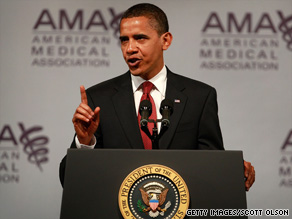
Overhauling health care  is key to U.S. economic stability, President Obama tells doctors Monday.
Overhauling health care is key to U.S. economic stability, President Obama tells doctors Monday.
1. Why is health care reform such a hot issue right now?
Fewer and fewer Americans have health insurance, and therefore cannot afford good medical care. Nearly 46 million Americans have no insurance, and 25 million more are underinsured. One major reason for this crisis is that many employers have stopped offering insurance to employees because of the high cost. In the United States, total health care spending was $2.4 trillion in 2007 -- or $7,900 per person -- according to an analysis published in the journal Health Affairs. The United States spends 52 percent more per person than the next most costly nation, Norway, according to the Kaiser Family Foundation. There's little debate that health care reform is necessary -- President Obama, Republican and Democratic members of Congress, the American Medical Association and America's Health Insurance Plans, which represents the insurance industry, all have agreed the system needs to be changed, although they disagree on how to do it.
2. So let's start with Obama. What are his plans for revamping the system?
A central point of the president's plan is to create a government-sponsored health insurance program that would be an option for all Americans, similar to how Medicare is now an option for Americans over age 65. He has also said he'd "like to see" prohibitions against insurers discriminating against people with pre-existing conditions, and incentives for people to use preventive services and wellness plans. Obama outlined this plan last week at a town hall meeting in Green Bay, Wisconsin, and on his Web site.
3. How does the president plan to pay for this?
Obama said he's already identified "hundreds of billions of dollars" worth of savings in the federal budget that could help finance health care reform, such as rooting out waste, fraud and abuse in Medicare and Medicaid. He's also proposed reducing tax deductions for high-income Americans.
4. What do the Republicans think of Obama's plan?
In particular, they don't like the idea of having a government-sponsored health insurance program for all Americans. They fear employers would opt for the government-run insurance over private insurance because the government option would most likely be less expensive, but Republicans say it would also be lower quality. For information, see Senate Minority Leader John Boehner's Web site.
5. Since they don't like Obama's ideas, how would Republicans like to reform health care?
Republicans think Obama's plan is costly and will make health insurance more expensive, not less. In a plan outlined this week, House Republicans proposed individual tax breaks for buying health insurance and "pools" of states and small business to get lower-cost health care plans. They also proposed increasing incentives for people to build health savings accounts, allowing dependent children to stay on parents' policies until age 25 and encouraging employers to reward employees for improved health.
6. I'm happy with the insurance I receive from my employer. What would health care reform mean for me?
If you receive high-quality health insurance from your employer, Obama said, his plan won't change that, and you can still keep your insurance and your doctors. Republicans, however, said that if Obama gets his way, there's a good chance your employer will stop buying the private insurance you have now and instead opt for the less-expensive government plan.
7. I have a pre-existing condition and can't get health insurance. Will health care reform help me?
You have a terrible problem and you're in good company. Millions of people who don't get insurance through their employer try to get insurance on their own and are turned down because they have a pre-existing condition. Obama said at the Green Bay town hall meeting that under his reforms, no insurance plan "would be able to deny coverage on the basis of pre-existing conditions," but he didn't explain how he would force insurance companies to insure people with pre-existing health problems. Similarly, Boehner wrote on his blog that "quality health coverage must exist for every American, regardless of pre-existing health conditions," but did not explain how he would pay to insure people with pre-existing conditions.
8. How do doctors feel about health care reform?
The American Medical Association said while it believes in health care reform, "the AMA does not believe that creating a public health insurance option ... is the best way to expand health insurance coverage." The AMA has told members of Congress that doctors fear a new government-sponsored health insurance program would reimburse them at Medicare rates. "Medicare reimbursement rates have not kept pace with the cost of practice," AMA President Dr. Nancy Nielsen told CNN earlier this week. "Our Medicare rates are back at 2001 rates, and the reality is, that's not where our rent is, that's not where the electricity is. The system for paying doctors is a broken system, and everybody acknowledges it." Other doctors' groups, however, support the idea. The American Academy of Family Physicians, the National Physicians Alliance and other groups put out a statement of support this week for Obama's plan. "Having the choice of a public health insurance plan will help make health care more affordable for patients, foster greater competition in the insurance market and guarantee that quality, affordable coverage will be there for our patients no matter what happens," they wrote in a joint statement..
9. Obama has mentioned high health care costs in McAllen, Texas, several times. What's up with that?
According to research conducted at the Dartmouth Institute, the average per person health costs for McAllen are sky-high compared with costs in other cities. In McAllen, the average Medicare beneficiary spends $15,758 per year, while the average Medicare patient in LaCrosse, Wisconsin, spends $6,412 per year. Another comparison: The cost in Miami, Florida, is $18,170, compared with $7,478 in Portland, Oregon. Dartmouth researchers believe doctors in high-priced cities tend to refer to specialists more and are more likely to put patients in the hospital rather than handling their problems on an outpatient basis.
advertisement
10. How do health care costs in the U.S. compare with costs in other countries?
In the United States, every person spends on average $6,714 for health care. That's significantly higher than in the United Kingdom, where $2,760 per person is spent; or in France, where the cost is $3,449 per person; or in Canada, where medical costs are $3,678 per person, according to the Organisation for Economic Co-operation and Development. While some would argue that medical care is better in the United States than in these other countries, others would say the opposite is true. For example, the United States ranks 50th in life expectancy, and 44th in infant mortality rates, according to the CIA World Fact Book. For more on international price comparisons, Video see this segment » on CNN Newsroom.

Read more...

Emergency Hospital Care - Health Care Reform needs to Start NOW....

Sunday, February 22, 2009

In his promise to provide health care reform, President Obama wants to make sure that every American has accessibility to health care. Now what does this truly mean? Well for one thing, hospital care would have to be totally re-vamped. Why? Well have you ever had to make a visit to one of the nations Emergency Rooms lately? Well I have, and let me tell you, it can be most unpleasant.
Here you are, in the emergency room because of what you consider an emergency, but reaction by the hospital is that your emergency can wait. Here you sit, and sit and sit.
I had another most repeated experience as I dealt with another visit to the hospital because of the ailing condition of my mother. She is a dialysis patient, and has constant issues with swelling and infections. It turned out to be a most unpleasant experience for her and for my wife and I who took the trip with her.
In an effort to spare my mother a trip in an ambulance, I decided to drive her to the hospital, where we then had to wait 4 hours, from 10:30PM until 2:30AM before she was actually taken in the back to be tended to. That was outrageous, but also just the fact that there were so many people waiting, for hours and hours on end.
The fact is, the hospitals are overwhelmed with patients these days, especially the emergency rooms that cannot handle so many strays of people, some of whom are there just because they don't have insurance and cannot go and see a doctor.
That brings me to my next question. What will the hospitals do now if Obama successfully provides medical care to 'everyone' as he has made another campaign promise to do so. I would hate to have to go to the hospital now in an emergency. Maybe the only way to go to the hospital would be to take the ambulance, as then they would just wheel you into the emergency room and you wouldn't have to wait, or will you? If they are so overcrowded now, maybe at that time, they may not have any hospital beds available.
The sickening thing you see every time you arrive at the hospital, that there are so many people that need 'immediate' attention, and they are waiting for hours before they can see someone. A person with broken bones, to someone who is having a hard time breathing, it makes no difference. You just have to wait, in a room called 'the emergency room' where everything seems to be handed as 'not an emergency'.
To make this long story short, I had to wait 4 hours in the emergency waiting room, then another 4 hours in the emergency room, just to be told that there was not much wrong with my mother, whom had a very apparent swelling in her dialisis access arm, who was screaming of pain just a few hours earlier. We waiting another few hours, as I was now up for nearly 27 hours straight, for her surgeon to take one look at her and tell her that she needed to be admitted.
What the emergency doctor does not know, but he will be know soon, is that I intend to pursue charges against him, along with bringing this very unfortunate experience to light in another blog that I will create. It's new address - HOSPITAL COMPLAINTS.NET will be available for everyone to read very soon. I would ask that anyone who wants to talk about an experience at their hospital, can also share their experience with others on the new website. I encourage people to stand up for what they believe in and express their thoughts on their experiences in hospitals.
My personal schedule if very busy, as I have many obligations at work, along with taking care of my family at home. There seems to be less and less time for me to write this blog.. But I will write when I can, to help everyone keep up with President Obama and the state of this country. In the meantime, I plan to find more time to write in my new blog. I hope that everyone who visits me here will want to visit the new blog soon. It will begin with my experience at the local hospital that I go to, and I'm hoping that it will contain experiences that you may have had in the past and in the present.
In my opinion, health care reform needs to start with reforming what we already have, a system that is broken, outdated, and we should be ashamed to show the world what we are here at home regarding health care facilities and policies that are adhered to at hospitals.
President Obama, now is the time to make another bold move, and truly revamp the medical field, in every aspect, provide health insurance to everyone, or at least provide good emergency care to everyone who seeks it. Let's not make the same ill-fated promises as some of our past Presidents have done.

Read more...

  © Free Blogger Templates Columnus by Ourblogtemplates.com 2008

Back to TOP