Follow Barack Obama prior and during his tenure as the 44th President of the United States. Read about my personal observations along with every day facts as they happen. This blog will only submit factual information about the first black President, now in his 2nd term of office.
BARACK OBAMA MEMORIBILIA available right HERE at www.obamaitems.info

BARACK OBAMA IN THE WHITEHOUSE

Send E-mail to the Editor at: obamainthewhitehouse@mail.com
Click on the GOOGLE TRANSLATE BUTTON BELOW AND SELECT YOUR LANGUAGE

Search This Blog

Showing posts with label Detainee Photos. Show all posts

Commentary: Obama's call on photos saved lives

Friday, May 22, 2009

  • Story Highlights
  • Brian Wise: President's decision to oppose release of photos was well-founded
  • He says initial release of Abu Ghraib photos sparked attacks on U.S. troops
  • Wise says releasing photos would have endangered U.S. troops
  • Abuse claims are being investigated by the Pentagon, he says

                                           updated 12:04 p.m. EDT, Thu May 21, 2009

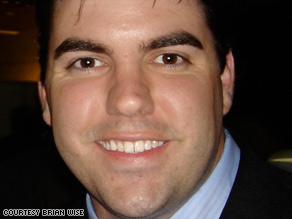
By Brian Wise
Special to CNN
 
Editor's note: Brian Wise is executive director of Military Families United, a national advocacy organization for military families based in Washington. A former television producer, he served as director of media relations for the Foundation for Defense of Democracies.
Brian Wise says President Obama's decision to fight release of prisoner photos saved the lives of U.S. troops.
Brian Wise says President Obama's decision to fight release of prisoner photos saved the lives of U.S. troops. 
(CNN) -- The president's decision last week to fight the release of dozens of photographs depicting the alleged abuse of prisoners in detention facilities in Afghanistan and Iraq was more than just a political decision. It was a decision that saved lives.
By fighting the release, President Obama put the safety of our troops before the demands of an activist agenda, and Americans should thank him for it.
There is no doubt that the needless release of those photos would have cost American lives. When photos surfaced of the shocking abuse at Abu Ghraib in April 2004, violence dramatically spiked in Iraq. In the 10 days following the release of the photos, nearly 40 American soldiers were killed.
American casualties doubled the next month and kept climbing throughout the following year as foreign fighters and terrorists flooded Iraq. The pictures were used on a daily basis to stoke the fire of hatred of America across the Middle East.
They were used as propaganda by terrorists and even members of the media to drive a message that the U.S. government was at best incompetent and at worst not much better than the extremists we were fighting.
The Abu Ghraib photos also hindered our mission in Iraq. Many Iraqis who were aiding American troops no longer viewed our troops as allies but as dangerous criminals. A bond of trust was broken that set the mission back years.
The Iraqi people did not view the Abu Ghraib photos as isolated incidents but methods that reminded them of the horror of the former regime. Of course, none of what was done at Abu Ghraib or in Afghanistan approached the vile mutilations of Saddam Hussein's Red Rooms and torture chambers or the Taliban's dismemberments and public stoning.
The terrible acts at Abu Ghraib were isolated incidents conducted by a small number of individuals who were quickly identified and prosecuted for their crimes.
If a new set of photos were to be released, we would be punishing the thousands of brave and innocent troops for the crimes of a few.
As American troops increase their presence in Afghanistan our service members must be able to cultivate relationships with the citizens of that country without those horrific images creating an environment of distrust and anger. As we begin leaving Iraq in the hands of Iraqi forces, we must ensure that the progress that the surge has made is not undone because of a political stunt intended to embarrass the previous administration.
What Americans need to appreciate is that there is a very real, active process within the Department of Defense that on an ongoing basis investigates and punishes members of the military who break the law.
What is important here is that the Pentagon has the photos and is using them as evidence in cases involving soldiers accused of abuse. Publicly releasing the photos will in no way aid the prosecution of these cases. It would be done only to satisfy some unfounded contention by conspiracy theorists that the government is just ignoring the problem.
Abuse cannot and should not be swept under the rug. It wasn't in Abu Ghraib and will not be now. Releasing these photographs would serve no purpose other than emboldening al Qaeda and other terrorist organizations by providing new tools for their recruitment of future jihadists. The president has committed to our troops that he will not let this disclosure hinder our missions in Iraq and Afghanistan and risk their lives.
A photo can depict reality, or it can deceptively shape perceptions. America is safer today because these photos are not public and because the president chose to stand up for our troops instead of catering to the whims of the ACLU. America's military families thank Obama for standing up for the interests and safety of our brave men and women in uniform.
The opinions expressed in this commentary are solely those of Brian Wise.

The Comments below are from onee of "Obama in the White House" readers
 BlackBerry  wrote:

May 23, 2009 7:51 AM   
Hi James, I'd like to comment here as usual. I think that what Brian Wise suggested is a pathetic excuse. That's just self-righteous and naive way of thinking; that by holding some photographed tortures actions, some lives can be spared. And don't make me start on his pathetic comparison of torture methods by Al-Qaeda and Saddam's with that of American "individuals". It is as if he wants to say that American ways of torture is more humane. "Well, if its indeed humane, it won't entitled 'torture', mister!" A torture is a torture. Speaking of pathetic comparison, what do American feels if one of them mourn for his/her beloved that died in Iraq when out of the blue, an Iraqi said, matter of factly, "Well you just lost one, I lost MANY?" See? that's how pathetic it was. Reading that article makes me sick. If what Brian Wise had in mind can represented the whole American, I will certainly ask "What do American really want honestly?" If they don't want their citizen get killed, well, don't engaged in a war. If they don't want their troops to die, "Well, what are you waiting for, Get out of there!" You reap what you sow.  THANK YOU FOR YOUR COMMENT

Read more...

Obama reverses course on alleged prison abuse photos

Wednesday, May 13, 2009

WASHINGTON (CNN) -- President Obama said Wednesday he told government lawyers to object to a court-ordered release of additional images showing alleged abuse of detainees because the release could affect the safety of U.S. troops and "inflame anti-American opinion."

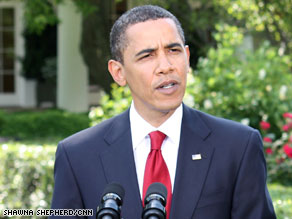
President Obama discusses the alleged prisoner abuse photos at the White House on Wednesday.

President Obama discusses the alleged prisoner
abuse photos at the White House on Wednesday. 
 
Releasing the photos could have a "chilling effect" on further investigations of detainee abuse without adding to the understanding of past abuses, he said.
The Pentagon was set to release hundreds of photographs of prisoners in detention facilities in Afghanistan and Iraq.
The photos "are not particularly sensational, especially when compared with the painful images that we remember from Abu Ghraib," Obama said, referring to the Iraqi military prison where photographs released in 2004 of detainees being abused and humiliated sparked widespread outrage.
"But they do represent conduct that didn't conform with the Army manual."
Obama reiterated that any future abuse of detainees is "unacceptable" and "will not be tolerated."
The publication of the photos would not add any additional benefit to investigations being carried out into detainee abuse -- and could put future inquires at risk.

Video Watch the president discuss his detainee photo decision »

"The publication of these photos would not add any additional benefit to our understanding of what was carried out in the past by a small number of individuals," Obama said.
"In fact, the most direct consequence of releasing them would be to further inflame anti-American opinion, and to put our troops in greater danger."
The announcement Wednesday was a reversal of what White House press secretary Robert Gibbs said last month, when he told reporters the White House had no problem releasing the photos.
Before Obama spoke to reporters, Gibbs said Wednesday afternoon that there was "a lot of back and forth in [Obama's] mind over the course of several weeks about ensuring that this protected those that keep us safe, that it protected our national security." iReport.com: Should photos be released?
The release was ordered in response to a Freedom of Information Act request filed by the American Civil Liberties Union. It followed Obama's decision to release Bush-era CIA documents showing the United States used techniques like waterboarding, considered torture by the current administration. Video Waterboarding 'a mistake' »
Obama's decision "makes a mockery" of his promise of greater transparency and accountability, ACLU attorney Amrit Singh said.
"Essentially, by withholding these photographs from public view, the Obama administration is making itself complicit in the Bush administration's torture policies," Singh said.
"The release of these photos is absolutely essential for ensuring that justice [is] done, for ensuring that the public [can] hold its government accountable, and for ensuring that torture is not conducted in the future in the name of the American people."
Singh said his organization is prepared to "do whatever it takes" to have the photos released.
Defense Secretary Robert Gates said Wednesday that grave concerns coming from top military brass may have influenced the president's decision.
"What's motivated my own change of heart on this and perhaps influenced the president is that our commanders ... have expressed very serious reservations about this ... and that the release of these photographs will cost American lives," Gates said.
"That's all it took for me," he added.
Democrats in the Senate were mostly quiet on Obama's reversal on Wednesday. But Sen. Russ Feingold, of Wisconsin, said he at least initially disagrees with it.
"I am generally opposed to keeping the American people in the dark for no other reason than to shield misconduct, avoid embarrassment or other reasons not pertaining to national security," Feingold said in a written statement. "From what I've heard so far, I'm not convinced there is a compelling reason these photos shouldn't be released."
Two Democratic congressmen had different reactions to Obama's decision.
Rep. Jerry Nadler of New York said he thinks "the administration may be very well justified in withholding the pictures."
Nadler, who said he agrees with the ACLU "98 percent of the time -- but not here," said he had not seen the photos but he doubted they provided any more information than was in Bush-era memos recently released.
"Get all the memos out, get everything out ... but with these pictures it may be that they're dangerous, and that's a legitimate concern," he said.
But Rep Lynn Woolsey of California said, "I would have preferred that they were out there."
"We have so much to do. It's such a distraction," Woolsey added. "Get these pictures out there and get it behind us."
The ACLU said the Pentagon had agreed to release a "substantial" number of photographs by May 28. Officials at the Pentagon said the photographs are from more than 60 criminal investigations between 2001 and 2006 and show military personnel allegedly abusing detainees.
"The disclosure of these photographs serves as a further reminder that abuse of prisoners in U.S.-administered detention centers was systemic," ACLU National Security Project Director Jameel Jaffer said before Obama's decision.
"Some of the abuse occurred because senior civilian and military officials created a culture of impunity in which abuse was tolerated, and some of the abuse was expressly authorized."
Singh added that the photographs "provide visual proof that prisoner abuse by U.S. personnel was not aberrational but widespread, reaching far beyond the walls of Abu Ghraib."
But Pentagon officials reject ACLU allegations that the photos show a systemic pattern of abuse by the military.
Pentagon spokesman Bryan Whitman said the Defense Department has "always been serious about investigating credible allegations of abuse."
"The policy of the Department of Defense is to treat all prisoners humanely, and those who have violated that policy have been investigated and disciplined," he added.
More than 400 people, Whitman said, have been disciplined based on investigations involving alleged detainee abuse. The discipline ranged from prison sentences to demotions and letters of reprimand.
advertisement
The Pentagon initially wanted to prevent the images from being made public, but decided to release them after losing two court cases, according to Whitman.
"We felt this case had pretty much run its course," he said prior to Obama's decision. "Legal options at this point had become pretty limited."

Read more...

  © Free Blogger Templates Columnus by Ourblogtemplates.com 2008

Back to TOP