In a world full of international hot spots, Barack Obama's administration must face a vast set of international crises and policy issues, which include the following:
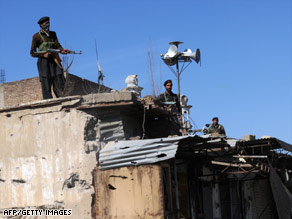
Afghanistan - More than seven years into the war in Afghanistan, an increase in violence fueled by a resurgent Taliban has renewed focus on the conflict. The number of international troops killed in Afghanistan increased in 2008, when compared with previous years. In December, the U.S. ambassador to Afghanistan said that in 2007, there were 1,000 improvised explosive device blasts, and in 2008, there were 2,000 - numbers that illustrate the uptick in fighting. The current debate centers on whether increasing the number of U.S> and coalition troops -- similar to the "surge" strategy employed in Iraq during 2008 -- would help foster stability in Afghanistan. Meanwhile, al Qaeda, which used the country as a base for launching the September 11 terrorist attacks, has reportedly taken refuge in tribal areas along the border between Afghanistan and northwestern Pakistan, As of January 14, at least 1,048 U.S. and coalition troops had been killed in Afghanistan, according to a CNN count.
China - An emerging economic and military superpower, China will receive a great deal of attention from the Obama administration. First, the U.S. and Chinese economies are intimately intertwined through trade, the financial markets, and the ebb and flow of currency. Additionally, China, which holds veto power as a permanent member of the United Nations Security Council, plays a pivotal role in international relations, especially during multilateral negotiations involving countries such as Iran. The Chinese are also regional power brokers, wielding substantial influence over policy toward countries like North Korea. Finally, there is the always-throny issue of human rights in China, which again caught the world's attention in 2008 when anti-Chinese demonstrations flared in Tibet.
Columbia - The United States has been providing aid to Colombia for the past three decades in an effort to curb drug trafficking that originates from the South American nation. Colombia is one of the world's major sources of cocaine and heroin, according to the U.S. Government Accountability Office. The U.S. state Department and U.S. Drug Enforcement Administration estimate that more than 90 percent of the cocaine brought into the U.S. comes from Colombia. The country also has to contend with paramilitary and narco-terrorist groups like the Revolutionary Armed Forces of Colombia (FARC) and the National Liberation Army (ELN), which are jousting for political power. Waves of violence, including assassinations, murders and kidnappings, tied to the drug trade and the paramilitary groups have rolled Colombia for much of its recent history. The United States has given more than 6 billion in aid to Colombia since 2000, according to a GAO report released in October 2008.
The Congo - The Democratic Republic of Congo (DRC), formerly Zaire, has been torn by war since the mid -1990's. The conflict has involved many of the country's neighbors and has killed an estimated 4 million people, according to World Vision, an aid group. The Rwandan genocide in 1994 weakened the government of Mobulu Sese Seko and allowed rebel groups, led by Laurent Kabila, to claim power three years later. In 1998, dissatisfaction with Kabila began a second conflict, and this time, six countries - the DRC, Rwanda, Uganda, Angola, Namibia and Zimbabwe -- joined the fighting. Kabila was assassinated in January 2001, and his son, Joseph, took over. The conflict came to an end five years later, and by June 2003, a new accord was in place. However fighting persisted in parts of the Congo for years afterward, especially in eastern Congo. Proxy armies set up by Uganda and Rwanda remained in the area and continued to arm militia groups, which fought among themselves and preyed on the civilian population. Hostilities flared again in october 2008, after Congolese rebels led by Laurent Nkunda, a renegade Tutsi general, renewed fighting in the eastern province of North Kivu.
Cuba - Fidel Castro, who ruled Cuba for decades, stepped down in February 2008 and ceded power to his brother, Raul. The chance in rule has spurred debate within the United States about its long-standing embargo on the island nation, which is 90 miles south of Florida. The U.S. and Cuba have no formal diplomatic relations. During the past few years, the Bush administration has tightened the U.S. embargo, increased Radio Marti news broadcasts into Cuba, curtailed visits home by Cuban-Americans and limited the amount of money Cuban-Americans can send to relatives. However, during the 2008 presidential campaign, Barack Obama called for loosening restrictions on travel to Cuba, so Cuban-Americans can visit relatives, as well as allowing larger money transfers to the island. "The road to freedom for all Cubans must begin with justice for Cuba's political prisoners, the right of free speech, a free press, freedom of assembly, and it must lead to elections that are free and fair," Obama said during a campaign rally in May 2008. Darfur, Sudan - Darfur, in western Sudan, is considered by many observers as the scene of this century's first genocide and is certainly the site of one of the world's worst humanitarian crises. The violence began in 2003, when rebels attacked government targets in Darfur, saying black Africans were being marginalized in the impoverished territory in favor of ethnic Arab groups. The Arab-led government retaliated, using government forces and government-armed Arab militia members known as the Janjaweed. An estimated 300,000 people have been killed during the past five years, and millions of others have been displaced to refugee camps, according to the United Nations. The U.N. and aid groups blame the Janjaweed for some of the worst atrocities, including rape, burning villages and poisoning wells. The Sudanese government denies genocide is occurring in Darfur and disputes the United Nations'
numbers. It says only 10,000 people have died in the fighting.
Iran - Relations between the United States and Iran have historically been chilly and have been further strained in recent years over Iran's nuclear program, which began during the mid-1970's and, earlier this decade, became controversial. Inspections by the International Atomic Energy Agency (IAEA) from August 2003 through November 2004 found traces of highly enriched uranium. Iran maintains that it is enriching uranium for peaceful purposes and as part of a burgeoning nuclear energy program. The United States, which suspects Iran is secretly building a nuclear weapons program, has called on Tehran to halt the enrichment program. In February 2006, Iranian President Mahmoud Ahmadinejad ordered Iran to end its cooperation with the IAEA. The United Nations later imposed sanctions on Iran over its nuclear program. During the presidential campaign, Obama said that he thought that a nuclear-armed Iran would be "unacceptable" and that he would help mount an international effort to prevent the country from acuiring nuclear weapons.
Iraq - After more than five years of war, the Obama administration will have to manage the withdrawal of U.S. forces from Iraq. During the presidential campaign, Obama said he would remove U.S. troops from Iraq within 16 months of taking office. His plan called for a "residual force" to remain in Iraq to fight terrorists and protect American personnel. Obama's campaign proposal will have to square with some top generals' preference for a gradual withdrawal. Whatever the eventual time line, under a new Status of Forces Agreement between Iraq and the U.S., all American troops will leave the country before Obama finishes his first term. The two nations agreed in December that American troops would withdraw from all Iraqi cities and towns by June 30, 2009. And, unless the agreement is renegotiated, all American troops will leave the country by the end of 2011. Until that date, American troops will continue to fight alongside Iraqis, but the Iraqis will take the lead, according to U.S. officials. As of January 14, at least 4,541 U.S. and coalition troops had been killed in Iraq since the war began in March 2003, according to
a CNN count.
North Korea - The U.S. has been at odds with the North Korean regime since the 1990's over its ambitions for a nuclear program. In 1994, North Korea pledged to freeze and eventually dismantle its nuclear weapons program in exchange for international aid to build tow power-producing nuclear reactors. Eight years later, North Korea, when confronted by the U.S. with proof that it was operating a uranium enrichment facility, admitted it had violated the
1994 agreement. In October 2006, North Korea said it successfully tested a nuclear weapon. However, a series of talks during 2007 resulted in North Korea agreeing to begin disabling its nuclear facilities for a $400 million aid package. In October 2008, the U.S. removed North Korea from its list of state sponsors of terrorism. nother round of talks began in December 2008 to track if North Korea was in compliance with the 2007 agreement.
Pakistan - Pakistan is n important US. foreign policy challenge for several reasons. Its proximity to Afghanistan and the role it has played in its internal politics during the past few decades give Pakistan great leverage over what happens in Afghanistans future. It is home to jihadist groups that are vying for more power domestically, seeking an Islamic state in Kashmir and trying to destabilize the region. Pakistan has nuclear weapons and has fought several wars during the past 60 years with India which also has nuclear weapons. Finally, some observers say Pakistan is on the verge of an economic crisis that could render it a failed state. In early December, Obama called the instability and increase in extremism in the region the "single most important threat"facing the United States. During the past two years, militants have assassinated Benazir Bhutto, a former prime minister who was once again campaigning for the post. And terrorists who killed 165 people in Mumbai, India, in late 2008 were trained in Pakistan and had links to Jihadist groups there, according to Indian and U.S. intelligence officials.
Russia - Though Russia, like almost every other country, is suffering from the ongoing international economic crisis and a drop in energy prices, it has gained considerable geopolitical power during the past few years as a result of its vast oil and natural gas resources. Russia is a member of the "uartet" - which also includes the United States. United Nations and the European Union - involved in brokering the Middle East peace process. It has also participated in talks with Iran and North Korea over their nuclear programs. The U.S. and Russia disagree on several fronts. The Russians have bristled at a U.S. anti-missle program that would put radar and missiles in the Czech Republic and Poland. The two nations were on opposite sides of the 2008 conflict between Russia and Georgia over the breakaway regions of Abkhazia and South Ossetia. The Russian government has also expressed concern that its former states, like Ukraine and Georgia, are hoping to join the 26-nation NATO defense alliance.
Venezuela - Venezuelan President Hugo Chavez, since his election in 1998, has adopted anti-American positions in regional politics. During a speech to the United Nations General Assembly in September 2006, in referring to President Bush, Chavez said, "The devil came here yesterday, and it smells of sulfur still today." During his presidential tenure, Chavez has nationalized the oil industry in Venezuela, and the profits from the energy boom earlier this decade have helped advance is positions. During the past few years, Chavez has either forged or
attempted to creae ties with nations that have adversarial relations with the U.S., including Cuba, Iran, Syria and North Korea, according to the US. State Department. The United States and Venezuela expelled each other's ambassadors in September 2008. A complicating factor for Obama's policymakers in regards to Venezuela is that the South American nation supplies 15 percent of U.S. crude oil imports.
Zimbabwe - The rule of Zimbabwean President Robert Mugabe has been characterized by economic and political turmoil. The African nation has the highest inflation rate in the world - a staggering 231 million percent - and faces shortages of fuel, electricity and medical drugs. The Zimbabwean central bank recently introduced a $50 billion note worth less than $20 in U.S. currency. The World Health Organization says that a cholera outbreak has killed more than 1,500 people since Auust 2008 and that nearly 30,000 cases have been reported. (The numbers are current as of December 29, 2008.) The United Nations said 5 million people need food aid. President Robert Mugabe blames the crises on sanctions imposed by the West on grounds that he is disregarding human rights. But Mubabe's critics attribute the crisis to his economic policies. On the political front, a power-sharing deal between Mugabe and his rival, Morgan Tsvangirai, signed in September 2008, is in tatters. Tsvangirai says the Mugabe regime has led a campaign of kidnappings and violence intended to intimidate his supporters.
Global Terrorism - Since the attacks of September 11, 2001, terrorists have not struck inside the U.S, but the threat of international terrorism is very much alive. l Qaeda's leadership is reportedly holed up in tribal areas along the border between Afghanistan and northwestern Pakistan. Though their capacity to plan an attack along the scale of 9/11 has been the subject of recent debate, their methods have been adopted by militant groups around the world. Recently, terrorists killed 165 people and wounded hundreds in Mumbai, India. Earlier this decade, terrorists struck many countries across the globe, including Spain, England and Indonesia. In 2006, a plan to bomb American and Canadian passenger aircraft departing from London was thwarted. A purported message from Ayman al-Zawhiri, al Qaeda's No 2 leader, criticized Obama's positions on Iraq and Afghanistan and mocked his worldview. "A heavy legacy of failure and crimes awaits you," he said on the Web posting. The message appeared November 19, 2008.
Mideast Peace Process - A final, comprehensive Israeli-Palestinian peace accord -- one that resolves issues over borders, refugees and the role of Jerusalem -- has been an elusive goal for U.S. presidents, and Obama is likely to find it just as difficult to achieve. At a w07 summit in Annapolis, Maryland, the two sides set the end of 2008 as a goal for completing a peace treaty. The year passed without a deal, and any prospects in the near future seem in jeopardy after the Israeli incursion into Gaza that began in late December 2008. Meanwhile, domestic politics in both camps also complicate the process. On the Palestinian side, Fatah, a moderate group, controls the West Bank, while Hamas, a more militant group, presides over Gaza. And in Israel, Prime Minister Ehud Olmert resigned in September 2008 amid allegations of corruption, with elections expected in February 2009.
Read more...